

Quick answer
If you are a man over 35 with belly fat that will not move despite the same diet and workouts that used to work, low testosterone is a likely driver. Low T lowers resting metabolism, reduces lean muscle, increases visceral fat storage and worsens insulin sensitivity. A medically supervised plan addresses the hormone side first, with lab work and, where appropriate, bioidentical hormone therapy such as BioTE, then combines it with a real weight loss plan. At Health Solutions in Decatur we run lab panels, interpret them with a physician, and build the plan from there. Men who need testosterone replacement are referred to partner clinics for treatment after lab evaluation, so you are not treated with a one-size approach.
Low testosterone is not a mid-life cliché. It is a measurable thing
Testosterone levels decline about 1% per year after age 30 in most men. For some men the decline is faster, for others slower, and for a meaningful minority the level drops into a range that causes real symptoms. The population-level numbers do not matter. Yours do.
The symptoms men come to us with are predictable:
- Weight gain centered on the belly, not the hips or thighs.
- Loss of strength and visible muscle, especially in the chest, shoulders and legs.
- Workouts that do not produce the response they used to, with longer recovery.
- Lower libido and poorer erectile function.
- Fatigue in the afternoon, poor sleep quality, flatter mood.
- Brain fog, loss of competitive drive at work, irritability.
A single symptom is not a diagnosis. Several symptoms, especially with central weight gain and lab work that confirms a low total and free testosterone, are.
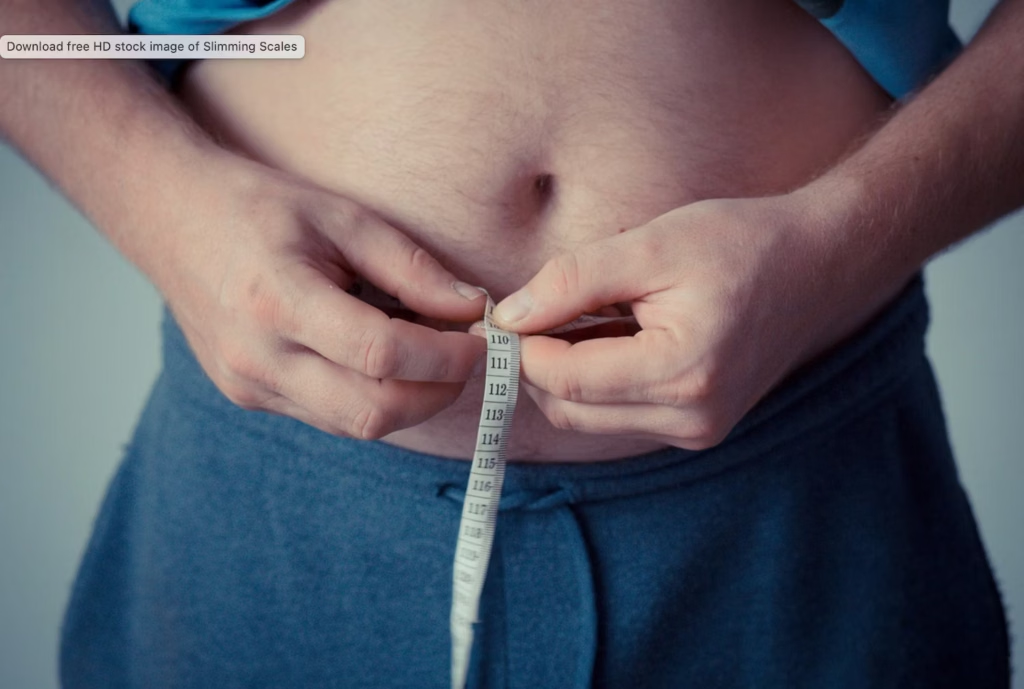
The link between low testosterone and belly fat is a two-way street
Testosterone directly influences where men store fat. When total and free testosterone are low, fat storage shifts toward the abdomen and the deeper visceral depot, the fat that wraps around organs and raises cardiovascular and metabolic risk.
Visceral fat then feeds the problem back. Adipose tissue, especially visceral fat, contains an enzyme called aromatase that converts testosterone to estrogen. The more visceral fat a man carries, the more testosterone gets converted, and the lower his effective testosterone goes. The lower his testosterone goes, the more abdominal fat he stores.
Breaking that loop is why treatment works. Address one side and the other eases.
What our workup looks like for a man with belly fat and suspected low T
A real workup is more than a single total testosterone number. We run:
- Total testosterone, free testosterone and SHBG, so we know how much testosterone is actually available to your tissues.
- Estradiol, to see how much is being converted.
- Luteinizing hormone (LH) and FSH, to understand whether the issue is primary (testicular) or secondary (pituitary).
- Thyroid panel (TSH, free T4, often free T3), because thyroid also drives metabolism and belly fat.
- Cortisol, because chronic stress physiology mimics low T and worsens central fat.
- Fasting glucose, HbA1c and fasting insulin, to measure insulin resistance.
- Lipid panel, CMP and PSA where age appropriate.
- Vitamin D, B12 and ferritin, which are commonly low and affect energy and performance.
Results come back in days. A physician reviews them with you and explains what each number means in plain language. A plan follows the labs, not a sales script.
Where BioTE and bioidentical hormone therapy fit for men
Bioidentical hormone therapy uses hormones that are molecularly identical to those the body makes. At our clinic we offer BioTE pellet therapy, which places small hormone pellets under the skin that release steadily over three to six months. Pellets avoid the daily routine of gels or weekly injections and keep levels steady rather than spiking.
For men, treatment with BioTE at Health Solutions is preceded by a full lab evaluation. Where the clinical picture supports testosterone replacement, we refer to a partner clinic that specializes in men’s testosterone treatment, so our patients get the depth of specialty care that comes with that focus. We coordinate so your weight loss plan, your labs and your hormone plan line up rather than running on separate tracks.
How a hormone-aware weight loss plan is different
The usual “eat less, move more” advice is not wrong. It is incomplete for a man whose physiology is working against him.
A hormone-aware plan changes four things.
1. Protein floor, not calorie ceiling. A man losing weight on a low testosterone background loses muscle easily. We set a protein target in grams per day based on your lean body mass and build the rest of the plan around hitting it.
2. Strength work as medicine. Progressive resistance training two to four days a week is as important as the nutrition work. It raises testosterone in men who train consistently, protects muscle during a calorie deficit and improves insulin sensitivity.
3. Sleep is a hormone intervention. Testosterone is produced largely during sleep. A man averaging five hours a night often cannot restore levels with any treatment short of pharmacology. We treat sleep as part of the plan.
4. Targeted use of injections and supplements where the plan calls for them. Lipo Burn, B12 and Skinny Shot are deployed based on labs and goals, not as a default.
The result is a plan that helps your physiology instead of fighting it.

What men see in the first 90 days
A realistic 90 days for a man on this kind of plan looks like:
- Month 1. Lab work, consultation, written plan. First strength and nutrition adjustments. Any injection or hormone work that applies starts. Most men report better sleep and steadier energy within three to four weeks.
- Month 2. Clothes fit differently before the scale moves the full amount. Strength starts to come back. Mood and focus are often the first symptoms to improve.
- Month 3. Visible loss in the midsection. Workouts feel like they are working. Many patients lose 10–25 pounds in 90 days on a well-built plan, with the majority of the loss from fat and the lean mass maintained or increased. Results vary by starting point, adherence and lab profile. Weight loss results are not typical and not guaranteed.
Men with significant insulin resistance or longer histories of untreated low T often take longer in the first month and accelerate in months two and three, once the metabolic environment catches up.
Common questions from men before starting
Will I need testosterone replacement? Not necessarily. Many men improve with lifestyle, sleep, strength and targeted supplementation alone. Where replacement is right, we refer to a partner clinic that specializes in men’s treatment, after labs and an evaluation.
How fast will I see the belly go? Visceral fat often responds faster than subcutaneous. Waist circumference typically moves before the scale catches up.
Can I combine weight loss and hormone work? Yes. Many men do, and the two reinforce each other. The order depends on labs.
Do you accept insurance? We are a self-pay clinic. HSA, FSA and major cards are accepted.
I am under 35 and already see this. Is it too early? No. We see men in their late 20s and early 30s with the same picture, usually driven by stress, sleep debt and insulin resistance. The earlier it is addressed, the faster it resolves.
Who this plan is for
- Men 30+ with central weight gain that will not move.
- Men whose workouts stopped producing results despite the same effort.
- Men with fatigue, mood changes, libido changes and sleep disruption.
- Men who want a lab-driven answer before they consider testosterone replacement.
- Men who want the weight loss and the hormone work handled together, by one team.
Myths men believe about low T and weight
“I am just getting older.” Age plays a role. Age is not the only variable. Sleep, stress, insulin resistance and inactivity account for more change in testosterone than birthday arithmetic does. Addressing them often raises levels meaningfully.
“I need testosterone replacement right now.” Maybe. Maybe not. The lab work tells us. Many men with moderate symptoms recover well on lifestyle, sleep, strength and targeted supplementation. Others need replacement to feel like themselves. Either way, the decision comes from labs and a physician conversation, not an online quiz.
“Testosterone treatment will give me heart problems.” The evidence here has evolved. Modern literature on well-monitored testosterone therapy in appropriate patients does not support the broad cardiovascular alarm that dominated older headlines. It is still a medical decision that requires supervision.
“Taking testosterone will make me infertile.” It can suppress sperm production, which matters if you are planning to father children. A good men’s program will discuss this before starting, and there are approaches that preserve fertility.
“I just need to lift more.” Lifting is one of the best things a man with low T can do. On its own, with poor sleep and untreated hormones, it is not enough.
Longer FAQ for men
How much weight can I realistically lose in six months? Men with significant central weight to lose, who follow a well-built plan with a hormone-aware approach, commonly lose 25 to 50 pounds over six months. Results vary. A larger starting point usually means faster early loss.
What happens if I just take testosterone without changing my habits? Many men who go that route see short-term improvements that fade, along with the side effects of a treatment that is not integrated into a plan. Treatment paired with a program outperforms treatment alone.
Will insurance cover hormone work? We are a self-pay clinic. HSA, FSA and major cards are accepted. We do not spend your time on insurance back and forth.
Can I come in with my spouse? Yes. Many of our best outcomes are spouses on parallel plans.
Do I need to come weekly? During the active weight loss phase, yes. Hormone pellet visits are every few months. We consolidate visits where possible so you make one trip.
What if I travel for work? Talk to the care team. We build plans around schedules, including travel. Patients across Metro Atlanta make this work.
Do you measure body composition, not just weight? Yes. Weight on a scale is one data point. Measurements, how clothes fit, strength on key lifts and lab trends are the other data we use to know whether a plan is working.
Can my teenage son come in? We treat adults. If you are concerned about a teenager, we are glad to refer to a pediatric endocrinologist who can evaluate age-appropriate options.
What if I am already on testosterone from another provider? Bring all records to the consultation. We often work alongside existing prescribers, and the labs and life changes we add to the plan can make existing treatment more effective.
What is the single most important habit change for men on this plan? Sleep. Consistently seven or more hours a night, with real sleep hygiene, is the one change that moves everything else. If you give us a plan and skip sleep, the plan will not deliver what it could.
How often will I come back once I hit my goal? Monthly visits in early maintenance, every one to three months after. Hormone pellet re-insertions are every three to six months. We shape the cadence around your life.
What should I eat the day before my first visit? Nothing special. If we are running fasting labs, we will tell you to fast overnight. Otherwise, eat normally. The first visit is about picture-taking, not performance.
Is there anything I should bring to the first visit? A list of current medications and supplements, any recent lab work, and a rough history of your weight and health over the past few years. A phone with your schedule for booking the next visit.
Book a consultation
If this describes you, book a free 15-minute consultation at our Decatur clinic. We will look at the full picture, order labs where needed and build a plan that handles both sides of the problem at once.
Call (404) 369-6300 or book online. 3660 Flat Shoals Rd, Decatur, GA. Serving Metro Atlanta since 2012.
Medical disclaimer: Hormone and weight loss results vary and are not guaranteed. Hormone therapy requires a full medical evaluation and is not appropriate for every patient. Testosterone replacement, where indicated, is referred to a partner clinic that specializes in men’s treatment.